




Key Takeaways:
- Burnout usually develops from chronic stress, emotional exhaustion, and poor recovery time, while addiction involves substance use that becomes harder to control despite negative consequences.
- Burnout and addiction can overlap when substances become a way to manage pressure, sleep, anxiety, or exhaustion, creating a cycle that can worsen both conditions.
- Structured treatment may be needed when cravings, withdrawal, tolerance, repeated failed attempts to cut back, or substance use despite harm become part of the pattern.
Burnout and addiction can be difficult to tell apart, especially when someone is still working, managing responsibilities, and appearing functional from the outside. Both can affect mood, sleep, focus, relationships, and overall health. Burnout often stems from chronic stress and emotional depletion, while addiction usually involves a growing pattern of substance use that becomes harder to control, even when it starts causing harm.
For many adults, the two can overlap. Substances may become a way to push through exhaustion, manage anxiety, sleep, or escape pressure. In other cases, an existing substance use disorder may become more intense as work stress, family demands, or emotional strain increase. Either way, getting clarity matters because the right support depends on what is actually driving the pattern.
San Diego Wellness Center helps adults address substance use and co-occurring mental health concerns through medically supervised detox, residential treatment, dual diagnosis care, therapy, and aftercare planning. With the right level of support, patients can stabilize, identify healthier ways to manage stress, and begin building a more sustainable path forward.
What is The Difference Between Burnout and Addiction?
Burnout is usually rooted in chronic stress and emotional depletion. It tends to show up after long periods of overwork, high pressure, poor boundaries, and not enough recovery time. The person feels drained, detached, and less effective sometimes, despite trying harder.
Addiction is a clinical condition involving compulsive use and difficulty stopping, even when the substance is causing harm. The person may want to cut back, set rules, or reset, but the pattern keeps returning. Over time, the brain becomes more wired to seek relief through the substance than through healthier coping tools.
Both can exist at the same time, and they often do. Burnout can increase the urge to escape. Addiction can deepen exhaustion and emotional instability. Burnout typically improves with rest, boundaries, and stress-focused care, while addiction often requires structured treatment and relapse prevention tools.
Burnout Symptoms That Can Mimic Addiction Symptoms
Burnout symptoms can look like someone is “falling apart,” even when no substances are involved. That overlap can cause confusion, especially for partners, coworkers, and family members trying to figure out what’s wrong.
Common burnout symptoms include:
- Constant fatigue that doesn’t improve with sleep
- Irritability, cynicism, or a shorter fuse than usual
- Feeling emotionally flat or detached
- Reduced motivation and lower satisfaction with accomplishments
- Difficulty focusing, remembering, or making decisions
- Increased anxiety, especially around performance or deadlines
- Sleep disruption and frequent mental “spinning” at night
- Pulling away socially because everything feels like effort
Burnout often changes how someone relates to life. The person may still be productive, yet internally they feel checked out. They may start avoiding responsibilities because their capacity is depleted.
Addiction Symptoms That Usually Point to a Substance Use Disorder
Addiction symptoms involve more than stress or exhaustion. They typically involve behavioral patterns tied to compulsive use, loss of control, and continued use despite consequences. These patterns can be hidden for a long time in high-functioning adults.
Common addiction symptoms include:
- Strong cravings and persistent preoccupation with using
- Increasing tolerance and needing more to get the same effect
- Withdrawal symptoms when cutting back or stopping
- Using more than intended or using longer than planned
- Repeated attempts to control use that don’t last
- Using to manage mood, sleep, stress, or social anxiety
- Neglecting relationships, health, or responsibilities over time
- Continuing use despite a clear negative impact
A substance use disorder often reorganizes life around access and relief. Even when someone is still meeting obligations, the substance can become the primary coping tool.
Key Differences Between Burnout and Addiction
Burnout and addiction can look similar at first because both can affect energy, mood, sleep, focus, and relationships. The difference usually becomes clearer when you look at patterns over time. Burnout often centers on emotional depletion and chronic stress, while addiction tends to create a repeated cycle of relief, regret, and continued use despite growing consequences.
| Area of Difference | Burnout | Addiction |
|---|---|---|
| Control and choice |
|
|
| Consequences and continuation |
|
|
| Escalation over time |
|
|
| Relationship to substances |
|
|
This is why burnout and addiction can be difficult to separate. Burnout can create vulnerability, and substance use may become a way to manage the pressure. When that coping pattern starts to feel necessary or harder to control, it may be time to consider more structured support.
Can Burnout Cause Addiction?
Burnout can increase the risk for substance misuse because it pushes people toward quick relief. When someone is exhausted, emotionally stretched, and running on stress hormones, the brain looks for something that works fast. Alcohol, cannabis, stimulants, or prescriptions can feel like a shortcut to calm, sleep, confidence, or energy.
Many people recover from burnout without developing a substance use disorder. Risk increases when substances become a repeated coping tool, especially when the person starts needing them to function.
The slide tends to happen in predictable stages:
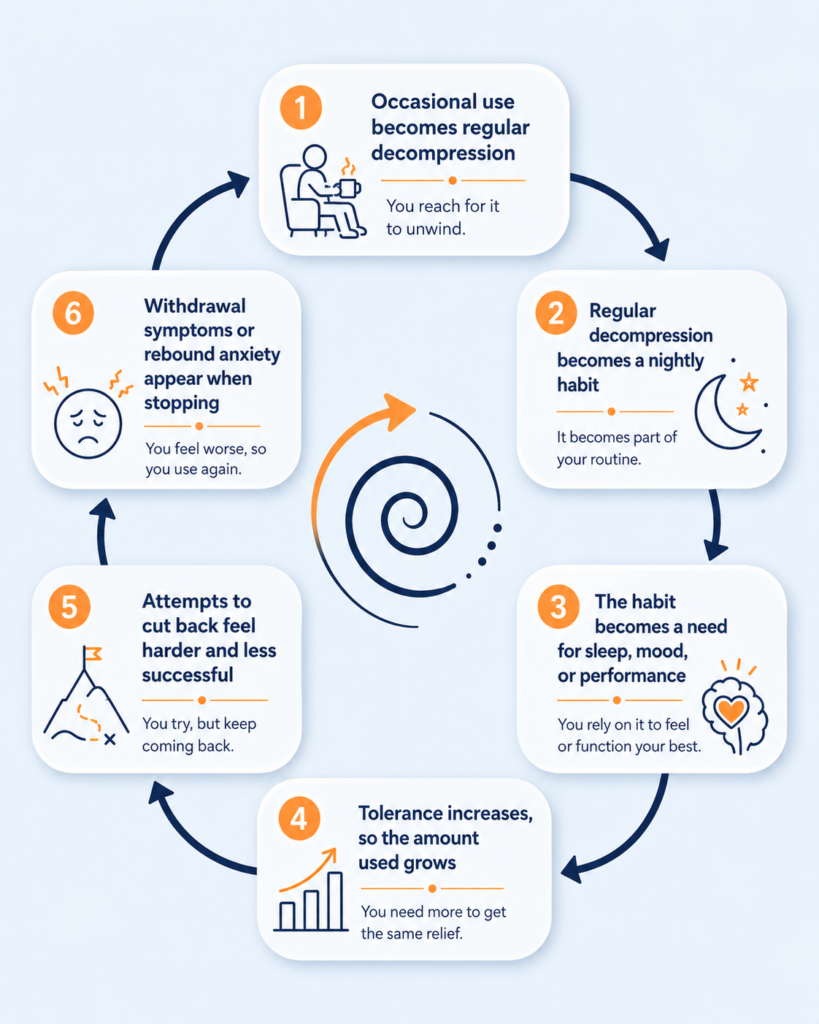
Burnout can be the doorway. Addiction becomes a trap when relief becomes dependency.
What Are Signs Burnout Is Turning Into Substance Abuse?
The shift often looks like coping turning into reliance. The person may still be successful and responsible, but the substance starts playing a bigger role in mood regulation, sleep, and stress tolerance.
Common signs include:
- Using earlier in the day than before, even if only “sometimes.”
- Needing a drink or substance to relax, fall asleep, or feel okay
- Feeling anxious, irritable, or restless when trying not to use
- Breaking personal rules about use more often
- Hiding use, downplaying it, or feeling defensive when asked
- Using alone more frequently to decompress
- Experiencing more frequent hangovers, brain fog, or mood crashes
- Noticing tolerance changes and needing more to feel the effect
- Making work errors or missing details that feel unusual
- Losing interest in activities that used to relieve stress naturally
This pattern can develop quietly, especially in adults who have demanding jobs and plenty of reasons to justify “needing something” to take the edge off.
Can Work Stress Lead to Alcohol Addiction?
Work stress can absolutely contribute to problematic alcohol use, especially when alcohol becomes the primary method of switching off. High-pressure roles often come with chronic cortisol elevation, interrupted sleep, and constant mental load. Alcohol can feel like relief because it changes the nervous system quickly, at least in the moment.
Over time, alcohol can worsen sleep quality, increase anxiety, and create rebound stress. That can lead to more drinking to manage the very symptoms alcohol is intensifying. This is a common pathway into high-functioning addiction, especially for professionals who still appear successful.
Work stress also tends to include social drinking norms like client dinners, networking, celebratory drinks, and “end of week” rituals. When alcohol is everywhere, and exhaustion is constant, escalation can happen without the person noticing until it feels hard to stop.
What Are Signs of High-Functioning Addiction?
High-functioning addiction often looks like everything is fine on the surface. The person may keep performing well while quietly losing stability behind the scenes. This is why families and even the person themselves can miss the signs.
Common signs include:
- Maintaining work performance while health declines
- Needing substances to sleep, socialize, or manage anxiety
- Using as a reward, then using it again to recover from using
- Increased secrecy, minimizing, or private rituals around use
- “Reset” cycles that repeat: cut back, then binge, then regret
- Mood swings, irritability, or emotional numbness becoming frequent
- Cognitive changes like brain fog, reduced focus, or forgetfulness
- Relationships feeling strained because presence and patience are fading
- Functioning through exhaustion rather than feeling well
High-functioning addiction often stays hidden because productivity can mask pain. The risk is that the crash tends to be sudden once the body and mind run out of margin.
What is the Difference Between High-Functioning Addiction and Burnout?
Burnout can make someone tired, detached, and less motivated. High-functioning addiction can create those same symptoms, but it adds a repeating cycle tied to substance use, such as cravings, reliance, tolerance, withdrawal, and continued use despite harm.
Burnout typically responds to stress reduction, boundaries, rest, and mental health support. High-functioning addiction often requires a more structured approach because the substance itself has become part of the person’s functioning pattern.
A simple way to think about it is this:
- Burnout is depletion from stress
- High-functioning addiction is depletion plus dependency
Both deserve care and can improve. The key is choosing the right level of support for what is actually happening.
When Burnout and Addiction Happen Together
It’s common for burnout and addiction to overlap. Burnout can drive increased use. Increased use can worsen burnout symptoms. This overlap often creates a loop that feels impossible to break through with willpower alone.
This pattern can create a difficult cycle. Sleep disruption may make mood, anxiety, and stress tolerance worse during the day. As irritability builds or focus drops, a person may become more self-critical, especially if mistakes at work or home begin to increase. Substances may then become a way to calm down at night or push through the next day, but the relief is usually temporary. Over time, the cycle can lead to more exhaustion, more stress, and greater reliance on substances just to keep functioning.
When burnout and addiction overlap, a plan that addresses both stress regulation and substance use patterns tends to work best. This is where integrated treatment and coping skill development can make a major difference.
When Addiction Treatment Is the Right Step
Burnout does not automatically require inpatient care. Addiction sometimes does, especially when withdrawal risk is present, relapse is frequent, or mental health symptoms are intense.
Indicators that structured addiction treatment may be appropriate include:
- Withdrawal symptoms when trying to stop
- Repeated failed attempts to control use
- Using despite clear health, relationship, or work consequences
- Escalating use patterns and tolerance changes
- Mental health symptoms that worsen during sobriety attempts
- A need for daily structure to avoid triggers and relapse
Choosing treatment is a decision to stop losing time and start rebuilding stability with support.
How San Diego Wellness Center Supports Recovery for Burnout-Driven Addiction
San Diego Wellness Center is a luxury rehab setting in San Diego County designed for adults who need structured care, privacy, and individualized treatment planning. The model supports both the physical side of addiction and the emotional factors that often drive use, especially in high-stress professionals.
Medical Detox
San Diego Wellness offers medically supervised detox for substances such as alcohol, opioids, fentanyl, benzodiazepines, methamphetamine, cocaine, marijuana, and prescription drugs. Detox includes 24/7 medical supervision and support to help clients manage withdrawal safely.
Residential Treatment
After detox, clients can transition into residential treatment with round-the-clock support in a structured living environment. This phase includes therapy, clinical support, coping skill development, and relapse prevention work.
Dual Diagnosis Treatment
Many adults dealing with addiction are also dealing with anxiety, depression, trauma symptoms, or chronic stress patterns. San Diego Wellness provides integrated dual diagnosis care, addressing mental health and addiction together rather than treating them separately.
Therapy Modalities
Therapy options include:
- Individual therapy
- Group therapy
- Family therapy
- Cognitive Behavioral Therapy
- Dialectical Behavior Therapy
- Solution-Focused Therapy
- Motivational Interviewing
- Trauma-focused therapy, including EMDR and Trauma-Focused CBT
These modalities help clients build healthier coping skills, improve emotional regulation, and reduce relapse risk.
Aftercare and Step-Down Support
Long-term stability often depends on what happens after residential care. San Diego Wellness supports aftercare planning with relapse prevention strategies, support group resources, sober living guidance, and referrals or coordination with outpatient, IOP, or PHP programs when needed.
Amenities and Holistic Support
A calm environment can support deeper engagement in treatment. San Diego Wellness offers private accommodations and amenities such as spacious rooms, movie nights, gym memberships, home-cooked or gourmet meals, video games, hiking, and other activities, plus mindfulness and meditation.
Executive Rehab
For professionals, executives, and business owners, San Diego Wellness offers executive rehab designed to support privacy, flexibility, and accountability. Limited access to work-related devices, secure Wi-Fi, and professional communication may be allowed on a case-by-case basis when clinically appropriate, with boundaries designed to protect recovery.
Get Clarity, Support, and a Path Forward Today
Burnout and addiction both deserve attention. Burnout can drain a person until they feel like a stranger to themselves. Addiction can quietly reshape coping and escalate risk, even when someone still looks successful. The most important step is choosing support that matches the pattern.
San Diego Wellness Center provides medically supervised detox, residential treatment, dual diagnosis care, evidence-based therapy modalities, aftercare planning, and executive rehab in a private, higher-end setting designed for long-term relapse prevention.
If the line between burnout and addiction feels blurry, a conversation can bring clarity fast. Contact our team at San Diego Wellness Center today to talk through next steps and find the right level of support.
FAQs
1. What is the difference between burnout and addiction?
Burnout is usually tied to chronic stress and emotional depletion, while addiction involves compulsive substance use, cravings, loss of control, and continued use despite harm.
2. Can burnout lead to addiction?
Burnout can increase the risk of substance misuse when alcohol, prescriptions, cannabis, or other substances become a repeated way to manage stress, sleep, anxiety, or exhaustion.
3. What are signs burnout is turning into substance abuse?
Signs may include using substances to relax or sleep, breaking personal rules around use, hiding use, increased tolerance, mood crashes, brain fog, or feeling unable to cope without substances.
4. What is high-functioning addiction?
High-functioning addiction occurs when someone continues meeting responsibilities while privately relying on substances, experiencing cravings, hiding use, or dealing with declining health and relationships.
5. When is addiction treatment the right step?
Treatment may be needed when substance use continues despite consequences, withdrawal symptoms appear, attempts to cut back fail, mental health symptoms worsen, or daily structure is needed.