




Key Takeaways:
- Detox symptoms often feel worse at night because of fewer distractions, increased anxiety, nervous system rebound, and frustration around sleeplessness, which can make withdrawal discomfort feel more intense.
- Nighttime withdrawal may include insomnia, sweating, chills, nausea, restlessness, cravings, panic-like symptoms, and sleep disruption, with risks varying by substance and health history.
- Medically supervised detox can make nighttime withdrawal safer by providing 24/7 monitoring, symptom support, sleep-focused care, and a structured environment during early recovery.
Detox can feel especially difficult at night. During the day, movement, distractions, and regular check-ins can make symptoms feel more manageable. Once things get quiet, withdrawal symptoms like restlessness, nausea, chills, anxiety, cravings, and sleeplessness can feel more intense.
This often happens because the body and nervous system are adjusting after substance use. Anxiety may rise, sleep can become harder, and the lack of daytime distraction can make discomfort feel stronger. In a medically supervised detox setting, symptoms can be monitored, comfort measures can be used, and sleep support can become part of a safer plan.
San Diego Wellness Center provides medically supervised detox in San Diego County for adults who need support through withdrawal. With the right structure and care, detox nights can feel less overwhelming, safer, and more manageable than trying to get through symptoms alone.
Why Do Detox Symptoms Get Worse at Night?
Nighttime withdrawal tends to feel worse for a few practical reasons. They are tied to biology, routine, and the way the brain responds when substances are removed.
Less distraction makes symptoms feel louder
During the day, your brain has more input, such as conversation, movement, light, and structure. At night, you’re left with your body sensations. Sweating, nausea, restless legs, shakiness, and racing thoughts have more room to take over attention.
Anxiety and hypervigilance spike when things quiet down
Withdrawal can heighten the stress response. When the environment gets quieter, the brain can flip into “scan mode,” making it harder to relax. That can look like pacing, checking the clock, feeling jumpy, or suddenly noticing every sensation.
The brain’s rebound effect is more noticeable
Many substances suppress the nervous system or artificially boost calm, confidence, or sleepiness. When the substance is removed, the brain can swing in the opposite direction and be restless, alert, irritable, and unable to settle. That rebound is often more obvious at night because sleep is the goal, and the body isn’t cooperating.
Sleep pressure and frustration add fuel
When someone expects sleep, and it doesn’t come, frustration builds quickly. That stress pushes cortisol and adrenaline higher, which can intensify withdrawal symptoms like sweating, nausea, rapid heart rate, and panic sensations.
Nighttime cravings often follow old habits
For many people, evening is when substance use used to happen, like after work, after dinner, or before bed. The brain remembers patterns. That memory can trigger cravings and discomfort even when someone is determined to stop.
This is one reason a structured medical detox helps.
Symptoms That Often Intensify At Night
Symptoms vary based on the substance, how long someone has been using, and their health history. Still, a few patterns show up frequently during withdrawal at night.
Common nighttime detox symptoms include:
- Insomnia or broken sleep
- Sweating, chills, and temperature swings
- Restlessness, agitation, or feeling “wired.”
- Nausea or stomach upset
- Shakiness or muscle tension
- Anxiety spikes or panic-like sensations
- Vivid dreams or nightmares once sleep starts returning
- Strong cravings and urges to “just get relief.”
Alcohol and benzodiazepine withdrawal can be medically risky, and symptoms can escalate quickly. Opioid withdrawal is usually not life-threatening in most cases, but it can feel extremely uncomfortable and exhausting. Stimulant withdrawal can bring intense fatigue, low mood, and sleep disruption. Withdrawal can shift fast, and monitoring matters.
Why Does Detox Cause Insomnia?
Insomnia during detox is one of the most common reasons people feel like they’re failing in early recovery. In reality, it’s a predictable withdrawal effect for many substances.
During detox, the brain has to rebalance chemicals tied to relaxation, mood, and sleep. Substances can disrupt neurotransmitters and change the body’s natural sleep rhythm, so once the substance is removed, sleep may feel light, broken, or difficult to reach. At the same time, withdrawal can keep the nervous system on high alert, creating restlessness, racing thoughts, and the feeling that the body cannot fully shut down even when exhausted.
Many people also enter detox already sleep-deprived. Alcohol, stimulants, opioids, and other substances can all affect sleep patterns in different ways, and detox forces the body to begin rebuilding a healthier rhythm. After several difficult nights, fear of another sleepless night can become its own trigger, increasing anxiety and making rest even harder.
This is where the environment matters. In a supervised setting, insomnia becomes something the team manages with structure, monitoring, and supportive interventions rather than leaving the person alone with it.
What Day of Detox Is Usually the Hardest?
The hardest day depends on the substance and the person. Patterns still exist, though, and it helps to know what many people experience.
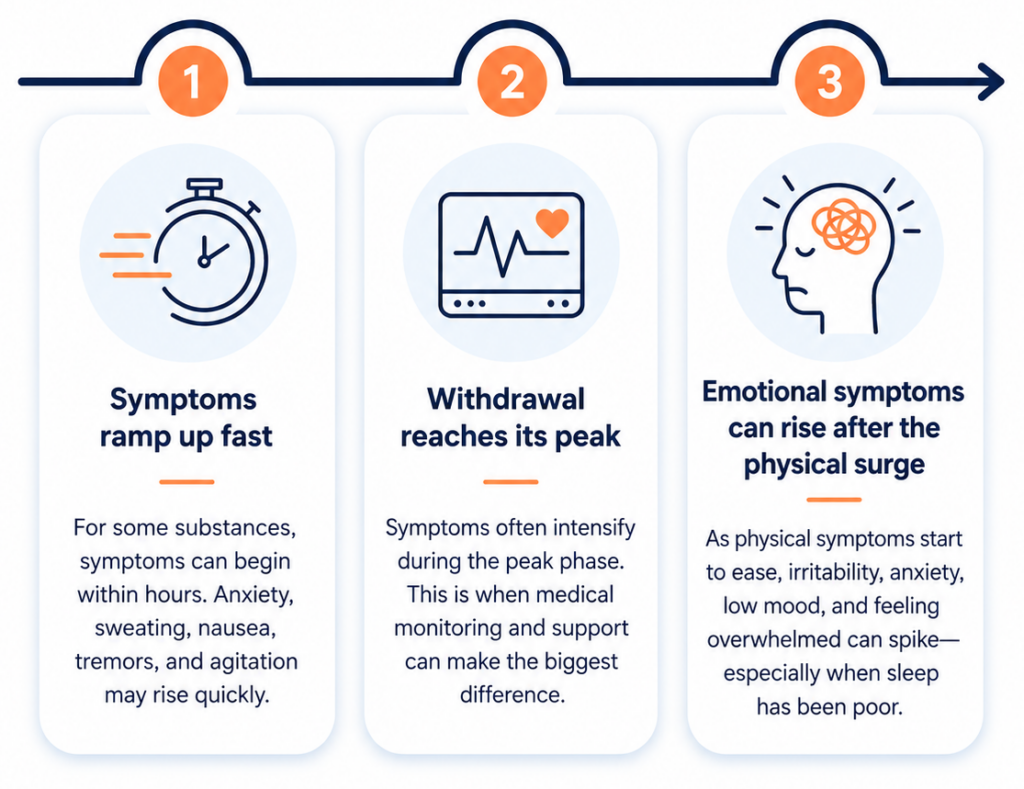
Instead of focusing on one “hardest day,” it can be more helpful to focus on staying supported through the peak so the brain and body can start settling. That is exactly what medical detox is designed to do.
How Long Do Nighttime Detox Symptoms Last?
Night symptoms usually improve over time, but the timeline depends on the substance, the length of use, and patient-specific factors like metabolism and health. Some people notice improvement within a few nights once the initial withdrawal phase passes. Others take longer, especially when sleep has been disrupted for months or years.
A few general patterns are common:
- Nighttime symptoms often feel strongest during peak withdrawal
- Sleep gradually returns in stages rather than all at once
- Vivid dreams and restless sleep can appear as the brain resets
- Anxiety and cravings may flare at night, even after physical symptoms improve
If symptoms feel severe, persist longer than expected, or include confusion, hallucinations, chest pain, or severe agitation, medical evaluation is important. The safest detox is the one where symptoms are monitored and treated appropriately rather than pushed through alone.
What Helps With Sleep During Detox?
Withdrawal can affect the body, nervous system, mood, and sense of safety, which means sleep often improves through a combination of structure, symptom management, clinical monitoring, and emotional support. The right approach depends on the substance, withdrawal symptoms, and overall level of medical risk.
| Sleep Support Approach | How It Helps During Detox |
|---|---|
| Consistent nighttime structure |
|
| Symptom management |
|
| Reduced triggers and exposure |
|
| Clinical monitoring and reassurance |
|
| Emotional regulation support |
|
At San Diego Wellness Center, sleep support during detox is part of a broader care plan that may include medical monitoring, comfort-focused support, mindfulness, meditation, and a structured environment. With the right care, detox nights can become safer, calmer, and more manageable.
Why Medical Detox Makes Nighttime Withdrawal Safer
Night is when many people feel most vulnerable. That’s also when risky symptoms can be missed if someone is detoxing alone. A supervised detox center in San Diego provides a safety net that can prevent complications and keep people from quitting early.
A structured medical detox supports:
- 24/7 monitoring and support
- Clinical check-ins when symptoms spike
- Safer management of withdrawal discomfort
- Better continuity into residential treatment when needed
San Diego Wellness Center offers medically supervised detox with 24/7 medical supervision and support for substances including alcohol, opioids, fentanyl, benzodiazepines, methamphetamine, cocaine, and prescription drugs.
Insurance Covered Detox in San Diego
Detox is a medical need, not a luxury. Many people hesitate because they assume they won’t be able to access care quickly or that insurance won’t help. Coverage depends on the plan and medical necessity, but insurance verification can clarify options fast.
San Diego Wellness Center works with many insurance plans and offers free insurance verification. This helps people explore insurance-covered detox in San Diego without guessing about benefits or delaying support.
The most important step is verifying benefits and completing a clinical intake so the level of care can match the risk level.
How San Diego Wellness Center Supports Detox
Detox is the beginning of recovery. Many relapses happen after detox when someone returns to the same stress and triggers without enough structure. San Diego Wellness Center supports continuity from detox into deeper treatment and long-term planning. We offer:
Medical Detox
Medically supervised detox is designed to help clients manage withdrawal safely with 24/7 medical supervision and support.
Residential Treatment
After detox, clients can transition into residential treatment with round-the-clock support in a structured living environment focused on therapy, coping skills, clinical support, and relapse prevention.
Dual Diagnosis Treatment
Co-occurring mental health conditions are treated alongside substance use through an integrated model, addressing both issues together rather than separating addiction from mental health care.
Therapy Modalities
Therapy options include individual therapy, group therapy, family therapy, CBT, DBT, Solution-Focused Therapy, Motivational Interviewing, and trauma-focused therapy with EMDR and Trauma-Focused CBT.
Aftercare and Step-Down Support
Aftercare planning includes relapse prevention, support resources, sober living guidance, and referrals or coordination with outpatient/IOP/PHP programs when needed.
Amenities and Holistic Support
A calm, private setting can reduce stress during early recovery. Amenities include spacious rooms, movie nights, gym memberships, home-cooked/gourmet meals, video games, hiking, and other activities, plus mindfulness and meditation.
Executive Rehab
San Diego Wellness offers executive rehab for professionals who need structured treatment while maintaining limited work responsibilities, with case-by-case access to work-related devices, secure Wi-Fi, and professional communication when clinically appropriate.
Nighttime Detox Symptoms Can Improve With the Right Support
Nighttime detox symptoms can feel intense, especially when insomnia, anxiety, and cravings hit all at once. The good news is that these patterns are common during withdrawal symptoms, and they usually improve as the nervous system stabilizes. The safest path is getting support that matches the risk.
San Diego Wellness Center provides medical detox and structured residential care in a private, higher-end environment designed to support adults through withdrawal, therapy, dual diagnosis care, and aftercare planning.
If nights have become the hardest part, a conversation can bring clarity quickly. Contact San Diego Wellness Center today to talk with our team about next steps, insurance verification, and safe detox support.
FAQs
1. Why do detox symptoms get worse at night?
Detox symptoms can feel worse at night because the body has fewer distractions, anxiety may increase, old substance-use routines can trigger cravings, and the nervous system may feel more alert.
2. What symptoms often get worse at night during detox?
Common nighttime withdrawal symptoms include insomnia, sweating, chills, nausea, restlessness, shakiness, anxiety spikes, vivid dreams, cravings, and difficulty staying asleep.
3. Why does detox cause insomnia?
Detox can disrupt sleep because the brain and nervous system are rebalancing after substance use, which can lead to racing thoughts, restlessness, anxiety, and broken sleep.
4. How long do nighttime detox symptoms last?
The timeline depends on the substance, length of use, overall health, and withdrawal severity. Symptoms often improve as the body stabilizes, but medical support may be needed.
5. How can medical detox help with nighttime withdrawal?
Medical detox can provide overnight monitoring, symptom management, comfort support, sleep-focused care, and a safer setting when withdrawal symptoms become intense or unpredictable.